
1-Can you tell us about your background, how you became a professional musician and recording artist, and who some of your mentors and heroes are?
I was born in Paris, France in 1973 and grew up there. I moved to the US in 1993, spent a couple of years at Berklee College of Music and moved to New York in 1995. My dad is Lebanese and my mom is Canadian. I think that may have helped spark my interest in exploring other cultures, which led indirectly to jazz. I was first exposed to jazz at my local high school, where there was an excellent music teacher by the name of Annick Chartreux. She is responsible for quite a few of her students becoming professional musicians, in different genres.
Early mentors include saxophonists Philippe Chagne, Jean-Louis Chautemps and Eric Barret in France. Later, in my formative years in the US, studying with Dave Liebman, Bill Pierce, George Garzone and Joe Viola was seminal for me. Yet later, starting in about 2010, I studied with Sophia Rosoff, which also felt like a breakthrough.
My heroes and inspirations are the greats of this music: Miles, Monk, Trane, etc. On saxophone particularly: Joe Henderson, Sonny Rollins and Stan Getz.
2-Your music, to our ears, aside from being exploratory, evocative, and picturesque in nature, is quite remarkably recorded. You seem to take great care in this. How common is this among recording artists today, and why is the sonic quality/recording process of your albums important to you?
I think that with the advent of digital, the ease of recording these days and the loudness war, most records don’t sound as good as they could, unfortunately. It’s great that it’s possible to record cheaply but there is still no substitute for great microphones, a great sound engineer who knows exactly where to place them, a great sounding studio etc. I strive to make the best recordings I can. I spent a long time trying to get the saxophone sound I want, so I want it recorded properly. Same for all the other instruments. The way the music is recorded really affects the way the listener perceives it. If everything feels natural and organic, if the recording is balanced and inviting, then I think people can get into the music more. That’s what I am trying to achieve.
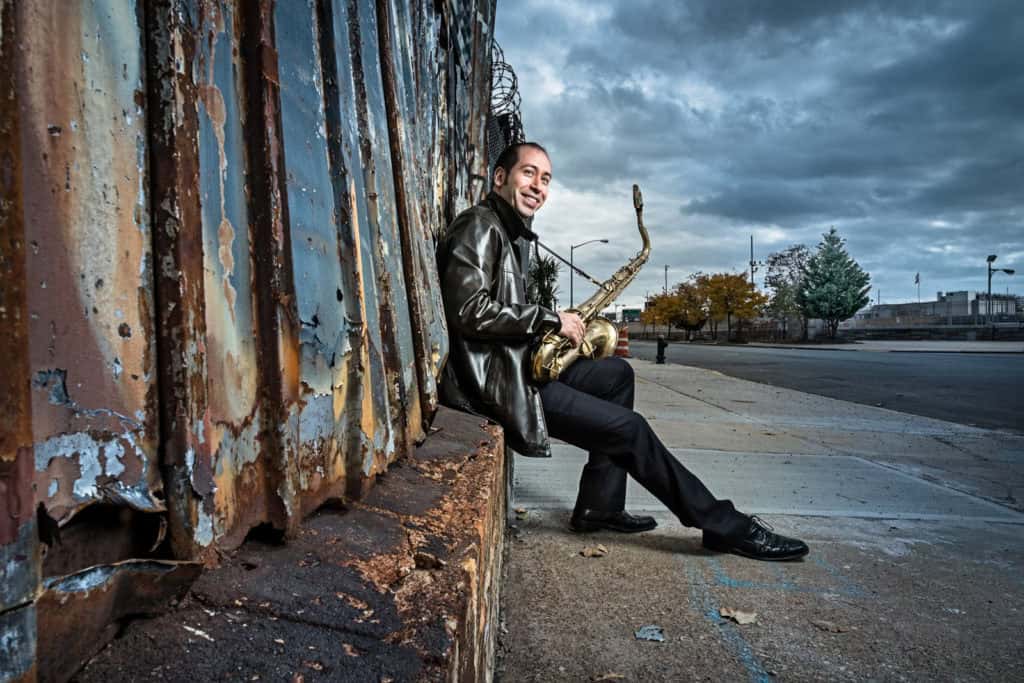
It’s easier said than done, but I’ve learned a lot about recording over the years and I know what works for me at this point. I like recording all in a room, not wearing headphones. I like recording to tape. I like certain microphones, mixing boards etc … I try to work in places that will have the gear I want. I’ve recorded 6 albums with engineer James Farber and I love working with him. At mastering, I will ask the mastering engineer not to use too much limiting, which means that my CDs don’t sound as loud as others, but also don’t suffer from the artefacts of excessive limiting. I try to avoid sample rate conversion. I am picky about the final steps in mastering, which can really make or break a record, in my opinion.
3-Can you tell us about your home playback system, and about your listening habits at home, and on the road. Do you go record hunting?
At home, for serious listening, I have a Fisher integrated tube amp from the sixties, which has been modified and revised, Rogers JR 149 speakers, a Garrard 401 turntable in a Steve Dobbins plinth, a Magnepan Unitrac arm with a Shure V15-III cartridge (JICO neo-SAS stylus), an Arcam FMJ CD 23 CD player and a mac mini that goes to a Wavelength Brick V3 DAC. I sometimes also use the Sennheiser HD 600 headphones. I have room treatment from GIK on the walls.
I also have a second system in my living room with a Dual 1229 turntable, a 90s Yamaha amp (that I’m hoping to change soon) and Polk Audio speakers.
On the road, I have an iPod Touch with Etymotic Research ER-4 headphones.
I listen mostly through speakers. I enjoy listening to music with people, which makes it a more communal experience. I listen to vinyl, high resolution files and CDs. I’ll buy new music on vinyl if it looks like it’s well done or high resolution files if they are available. I don’t have any streaming services. I listen to all sorts of music, but mostly jazz and classical.
I buy records on eBay and in record shops. There is one near me in Brooklyn where I’ve scored some good LPs!
4-Can you tell us what are you current ear worms? Secondly, there any fellow artists who you feel deserve wider exposure that you would like to tell us about?
Recently, I’ve been listening to Toots Thielemans’ first record, “Man Bites Harmonica”, John Lee Hooker’s “Travelin’” and Hampton Hawes’ “Four”.
I think there are a lot of contemporary artists, particularly in jazz, that deserve wider recognition. In fact, most jazz artists deserve wider recognition! I think your readers might enjoy the music of pianist Laurent Coq, saxophonists Chris Cheek, Bill McHenry and JD Allen, and composer and pianist Guillermo Klein.
5) Do other art forms such as books, visual arts, or cinema influence your creative process?
Yes, definitely. Visual arts in particular, as a way to think differently about form and its relationship to artistic personality. I remember seeing a Picasso sculpture exhibit a couple of years ago and being impressed by how diverse his output was, yet his vision was always present. Literature can be an influence too. I have a song called “Middle Earth” in reference to Tolkien’s “Lord of the Rings”. Sometimes someone else’s own creative process can be inspiring. I’m a big Stanley Kubrick fan and his well known perfectionism is an inspiration when doing quality control on an album! The time and effort you put into something always makes it better.
6) MQA has been a controversial topic among audiophiles recently. It has been criticized for being lossy, a closed proprietary system, and a fee generating scheme. However, some have subjectively claimed it “improves” the sound of digital masters. What is your take?
I honestly don’t know what MQA sounds like, as I’ve never even heard an MQA file. I have a problem with the fact that proponents of it seem to want to apply it retroactively to recordings. I don’t think that’s wise, given that approval for the master was given years before. Whatever MQA does, good or bad, it does something and thus I think it runs the risk of changing the sound of a recording in a way that the artist and/or producer didn’t sign off on. I also don’t like the fact that, according to what I’ve read, MQA encoded files are supposed to gradually take the place of high resolution recordings. I am happy to pay for high resolution recordings, I want to keep the option of buying them as a consumer.
7) Lastly, can you tell us about your fascinating new project, which is going to be an all analog vinyl (AAA) release?
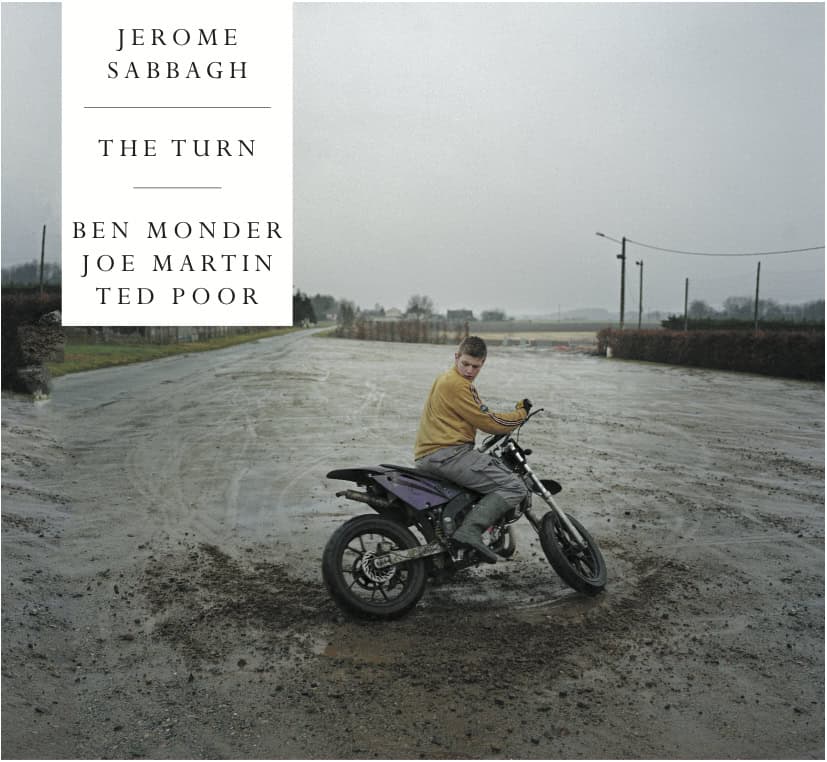
The new record is called “No Filter”. It’s a quartet recording that I co-lead with guitarist Greg Tuohey, who I’ve known since we were both at Berklee, with Joe Martin, who I’ve played with for almost 15 years, on bass, and great young drummer Kush Abadey. Like my last record “The Turn”, it was recorded live to two track tape (half inch tape at 30 ips) by James Farber at Sear Sound. It was mastered by Bernie Grundman, who also cut it to vinyl directly from the analog tape. It will be pressed at QRP. The music is all originals, some by Greg, some by myself. We are really happy with the music and sound and we hope people will dig it! It’s coming out in October on Sunnyside but you can preorder the vinyl on my website www.jeromesabbagh.com. We also sell reel to reel tapes on a case by case basis, as some people have been requesting them. And the record will be available on CD and download.
Jerome’s Summer Day 2018 Playlist:
Kurt Rosenwinkel, “Kama” (“Caipi”)
Laurent Coq, “Life” (“Kinship”)
Rebecca Martin & Guillermo Klein, “Just As In Spring” (“The Upstate Project”)
Jozef Dumoulin, “The Dragon Warrior” (“Rainbow Body”)
Frank Wess, The Very Thought of You (“Magic 101”)
D’Angelo, “Prayer” (“Black Messiah”)
Craig Taborn, “The Shining One” (“Daylight Ghosts”)
Schumann, 3 Gesänge, Op. 83: III. Der Einsiedler (“Einsamkeit Lieder” by Matthias Goerne and Markus Hinterhäuser)